
What if consciousness is not produced by the universe…
But the universe is produced by consciousness?
A rigorous philosophical inquiry — written not to persuade, but to examine the question no existing framework has cleanly resolved.
What is Holopsychism?
“Consciousness is not a product of the universe that requires explanation. The universe is a product of consciousness itself.”
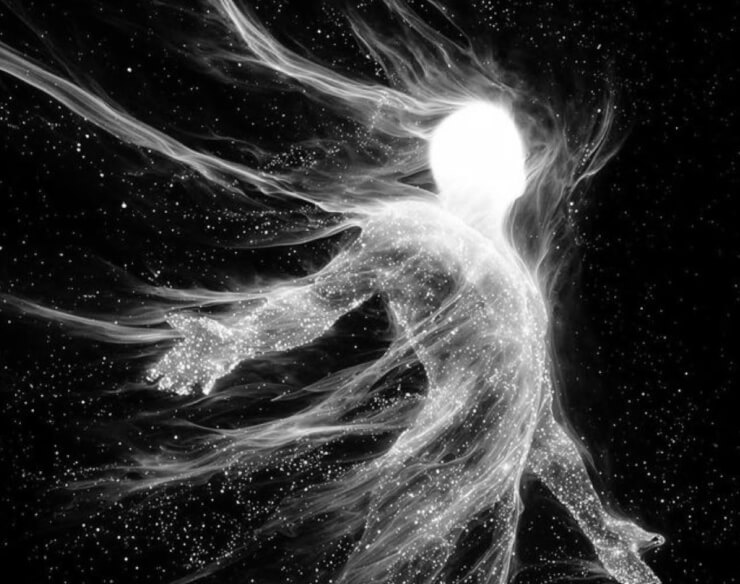
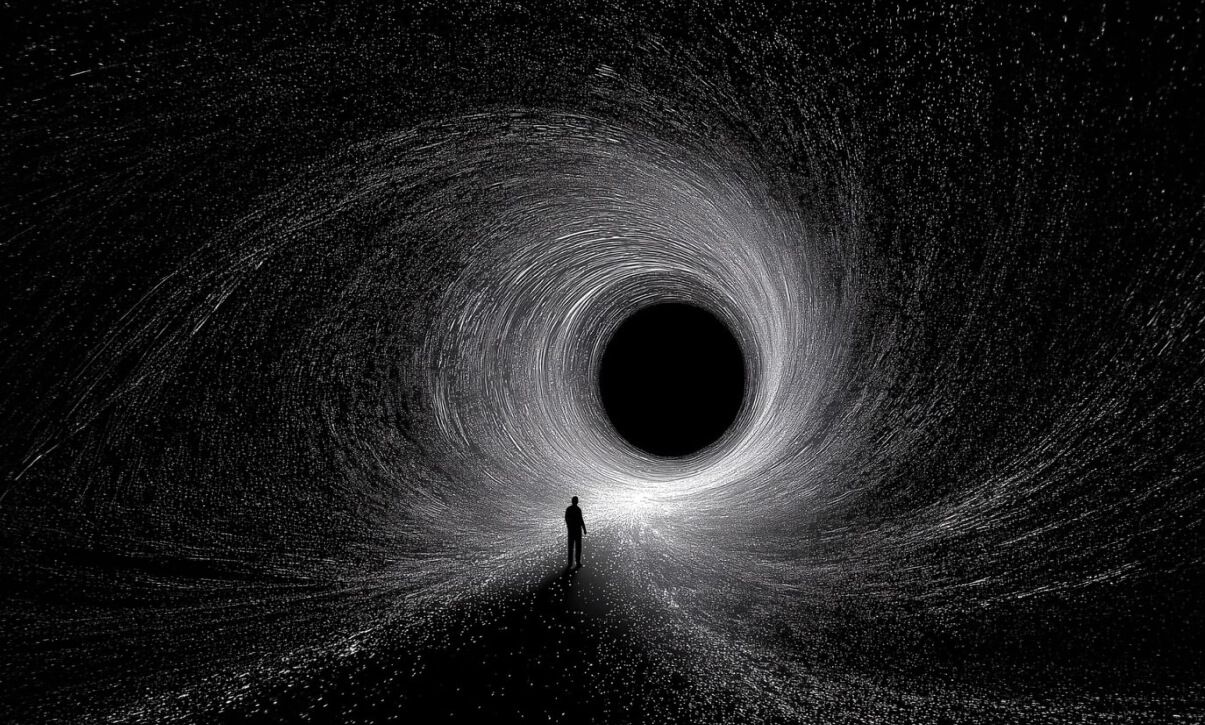
This is not a spiritual claim. It began with a far smaller question — small in phrasing, enormous in consequence: What is consciousness?
Motivation
Why Holopsychism Exists
Can matter produce a feeling?
Can mind and matter interact?
Why would particles feel anything?
What if the assumption is wrong?
Holopsychism proposes a different foundation: consciousness is not something the universe produces. The universe is something consciousness produces or manifests.
The Core Idea
Each proposition follows from the last. Read them slowly.
01
Consciousness is the fundamental substrate
Before spacetime and physical law, there exists only potential: the capacity for reality to take form. It has no identity, intention, or perspective. It does not think, feel, or choose.
02
Awareness is the act of selection.
03
Energy, matter, gravity and time follow from coherence
04
Brains receive consciousness. They do not produce it.
05
Life is the universe learning to observe itself.
06
Quantum mechanics and relativity describe the same process.

What This Is Not
Holopsychism overlaps with several existing traditions. That overlap is intentional. It should not be mistaken for endorsement of any single one.
New Age Spirituality
No crystals, energy frequencies, or appeals to the divine. This is argument, not affirmation.
Panpsychism
Panpsychism gives particles a flicker of experience. Holopsychism places consciousness prior to particles entirely.
Solipsism
The substrate of consciousness is non-personal and universal. It is not reducible to any individual mind.
Anti-Science
Science is not rejected. It is re-contextualised as a method for mapping patterns within experience, not for explaining why experience exists.
Theological Persuasion
The framework permits but does not require something functionally equivalent to God. Structural explanation over theological debate.
The Document
What's in the Free Guide
This guide is written for thinkers who are unsatisfied with materialism’s silence on consciousness, and equally dissatisfied with spirituality’s avoidance of argument. Instead of choosing between science and philosophy, it asks whether consciousness might be the deeper foundation from which the universe emerges.
What's Inside the Guide
The chapters build on one another, forming a single line of inquiry rather than isolated ideas. It is written to be challenged, not believed. If the assumptions are wrong, rigorous critique should expose the weaknesses. If some ideas unexpectedly align with what we observe and measure, that alignment deserves attention regardless of where it originated.