
Attention schema theory says the brain builds a simplified model of its own attention, and that model — not an extra inner light — is what we call awareness. Michael Graziano and Taylor Webb state it in one line: "subjective awareness is the brain's internal model of the process of attention" (Frontiers in Psychology, April 23, 2015).
Read closely, that is a claim about why we report an inner life, not a denial that we have one. AST offers a mechanism: a system that models its own attention in schematic, physically vague terms will describe itself as having something immediate and non-physical going on, and it has no more accurate account available to it. That is as close as physicalism has come to the hard problem. It does not show that experience is nothing. It shows that the belief in experience is explicable — and those are different results.
What is attention schema theory?
Two plain definitions first. Attention is the brain's allocation of processing to some signals rather than others — a physical sorting, measurable from the outside. A schema is an internal model that stands in for something complicated: not a copy, but a useful shorthand that leaves out almost everything in order to be fast.
Put them together and you have the proposal. The brain, on this account, does not only attend; it also keeps a running model of the fact that it is attending. That model is the attention schema, and its contents are what we introspect when we say we are aware of something. The secondary summary of the literature puts it the same way: "brains construct subjective awareness as a schematic model of the process of attention" (Wikipedia, "Attention schema theory," consulted September 14, 2026).
What is established here is narrow and worth stating exactly: the theory has been published and defended in these terms by Graziano and Webb. Whether it is true is a separate question, and it remains open. Confusing the first with the second is how most arguments about AST go wrong in the opening minute.
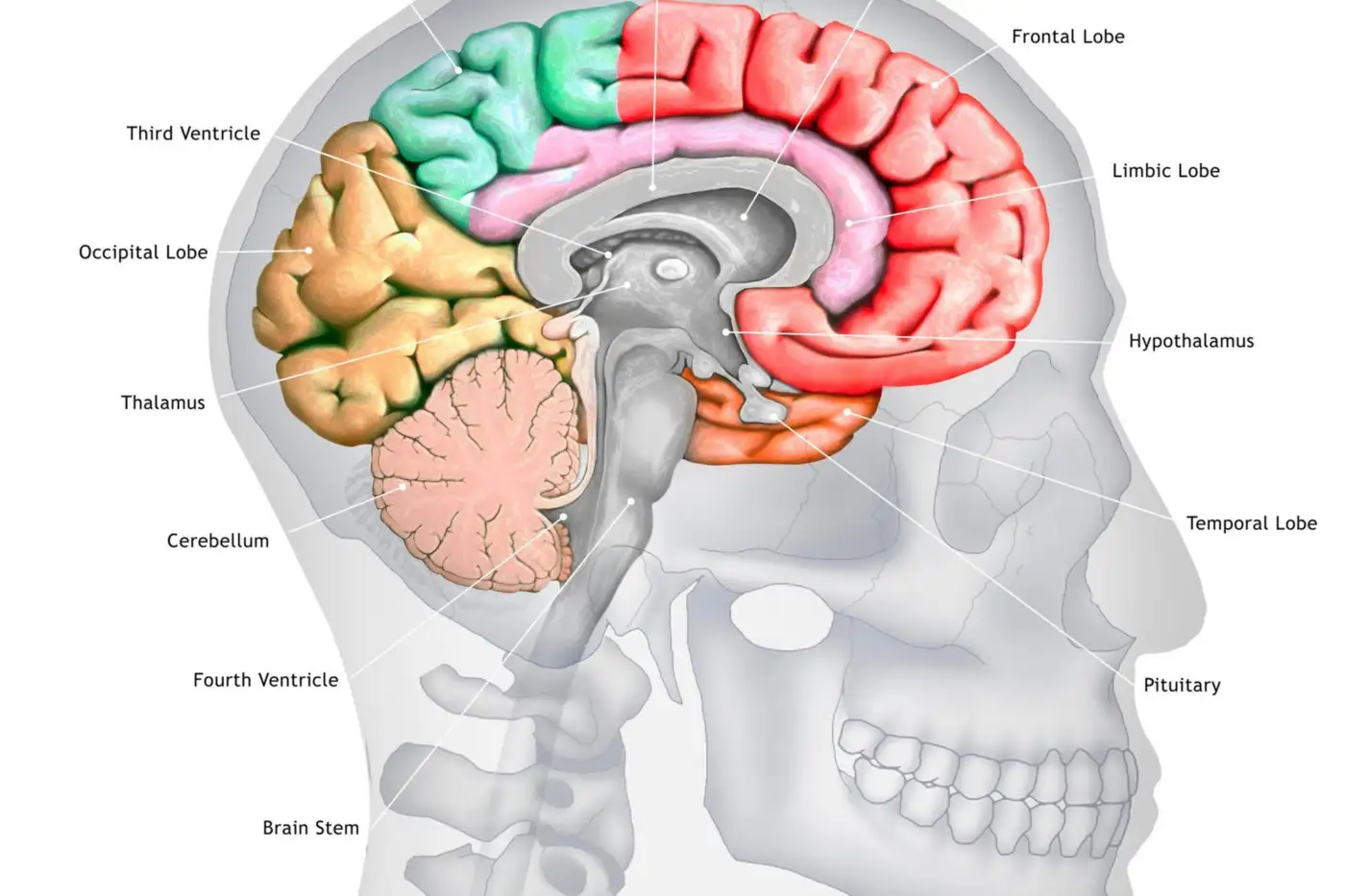
How does an internal model produce the belief in awareness?
The force of AST comes from the word schematic. A model that tracked attention accurately — synapses, competition between signals, timing — would be slow and useless for control. So the model is coarse. It describes attention as a relation between the self and an object: something has been taken hold of, vividly, right now, without machinery. Strip out the machinery and what remains looks like a non-physical property.
The system then reports what its model contains, because there is nothing else to report from. Asked what awareness is, it answers that awareness is an immediate presence with no mechanism — not because it has detected such a thing, but because its only instrument says so. The certainty we feel about our own consciousness becomes, on this reading, a feature of the instrument rather than evidence about the world.
That is a real explanatory move, and a sharp one. It takes the datum that physicalism struggles most with — our insistence that something more is going on — and derives it rather than dismissing it. Any serious critic has to answer it on that level.
Is attention schema theory a form of illusionism?
This is where the theory is most often misread, in both directions. Graziano and Webb describe awareness as the brain's model of attention, and a model is a real thing with real contents and real effects on behavior. Calling something a model is not calling it absent. The careful version of the claim is that our description of awareness is inaccurate, not that the state described is empty.
It is also not interchangeable with every position that treats introspection as unreliable. Those positions are neighbors, not the same address, and collapsing them costs you the argument's actual shape. If the question of whether consciousness itself is an illusion interests you, two theses usually travel bundled and should not: that introspective reports misdescribe their object, and that there is no object. AST commits clearly to the first. The second is a further step that the mechanism itself does not force.
Here the debate is genuinely live. Critics argue that explaining the report leaves the explanandum untouched — that you can account for every word a system says about its experience while the experience itself sits outside the account. Defenders reply that once the report is fully explained there is no residue left to explain, only a model insisting there is. Neither side has closed the other down.
If that last exchange is the part you want to sit with rather than settle, the free guide works through it slowly.
What does AST get right that other physicalist theories miss?
Most physicalist accounts answer a different question than the one skeptics are asking. They identify a process in the brain — integration of information, wide broadcast of a signal — and propose that this process is consciousness. Even granting the identification, the skeptic's question survives intact: why should that process feel like anything, and why does the system claim it does?
AST takes the second half of that question as its target. It does not begin by declaring which mechanism is conscious; it asks why any mechanism would announce itself as conscious, and answers in terms the mechanism can actually supply. That reordering is the theory's real contribution, and it holds whether or not the theory turns out to be correct.
The comparison below is about what kind of question each move answers, not about which is right.
| The question | What an identity claim gives you | What AST gives you |
|---|---|---|
| Which physical process is conscious? | A named candidate mechanism | No verdict; not its target |
| Why does the system say it is conscious? | Usually left open | A derivation from the model's contents |
| Why does the report feel unarguable? | Usually left open | The model offers no alternative description |
Set against how AST compares to other theories of consciousness, the pattern holds: AST buys traction by lowering its target, and that trade has a cost.
Where does the explanation stop?
It stops at the point where the model is asked to account for the modeler. AST explains why a system describes itself as aware. It does not, on its own terms, explain why the modeling is accompanied by anything at all rather than running in the dark — and the honest form of the theory does not claim to have resolved the hard problem. That is the open edge, acknowledged by careful proponents and critics alike.
What follows is Holopsychism's proposal, and it should be read as a proposal rather than a finding. The framework treats consciousness as pure potential — not a substance and not a mind, but the pre-mental condition under which anything can be experienced at all — and treats awareness as selection: the narrowing of that potential into one selectively stable pattern rather than another. On that reading, the brain is a receiver, filter and translator rather than a generator, and resolution is a spectrum, not a hierarchy.
The two point in opposite directions of explanation, so they are not rival answers to one question. AST describes with some precision the machinery by which a filter models its own filtering. The framework's disagreement is with the assumption that the filtering produces what it filters. Nothing above demonstrates the framework is right; it is a tentative reading that explains less than it hopes, and it still owes an account of why coherence takes one form and not another. The framework's account of awareness sets out that argument in full, including where it thins.
Notice what both sides concede. Everyone here agrees that the report is manufactured — that introspection hands you a summary rather than the thing summarized. The split is over whether the summary is all there is, and no introspective act can settle it, because introspection is the instrument under suspicion. Holding that position without reaching for a comfortable exit is most of the discipline this question requires.
The guide takes that discomfort as its starting point instead of resolving it early.
FAQ
Who proposed attention schema theory?
Michael S. A. Graziano and Taylor W. Webb set it out in "The attention schema theory: a mechanistic account of subjective awareness," published in Frontiers in Psychology on April 23, 2015, where they describe subjective awareness as the brain's internal model of the process of attention.
Does attention schema theory solve the hard problem of consciousness?
It does not settle it. AST gives a mechanism for why a physical system reports having experience. Whether explaining the report dissolves the question or leaves it standing is an open dispute, and the theory should not be presented as having closed it.
Is awareness the same thing as attention under AST?
No, and the distinction carries the theory. Attention is the physical process of allocating resources to some signals over others. Awareness, on this account, is the brain's schematic model of that process — a description of the machinery, not the machinery.
Does the theory claim consciousness does not exist?
That reading goes further than the claim. Describing awareness as a model says the model's account of itself is inaccurate. It does not, by itself, establish that there is nothing being inaccurately described, and the two theses are worth keeping apart.
Can attention schema theory be tested?
Its predictions concern reports and failures of self-modeling, which is more tractable than most accounts in this area. What no experiment decides is the question underneath: whether a complete account of the reports would be a complete account of consciousness.